Why This Fixture Punishes Sloppy Tickets
Two teams, one identical form string. Racing Santander and Espanyol both walk into El Sardineros on DDLLW, and if you have been betting La Liga long enough, you already know what that shape does to a punter's brain. It looks like a coin flip, so people treat it like one. They slap a small stake on the home side because +130 feels like value, or they take the draw because both teams drew twice in five. Both instincts are half-thought-through, and half-thought-through is how bankrolls leak.
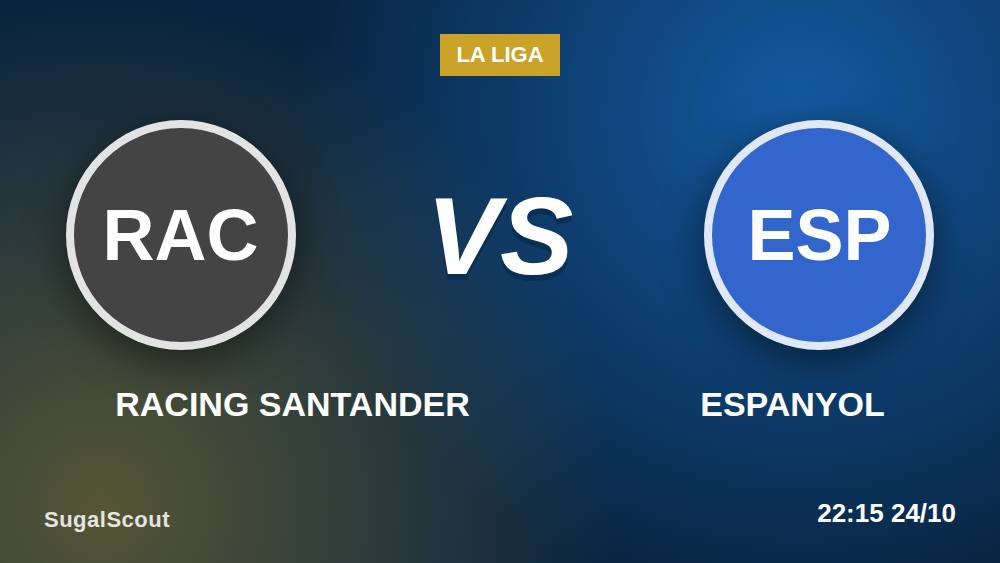
Kickoff is 2026-10-24T14:15Z, which lands in the late-evening window for Philippine viewers — roughly 10:15 PM Manila time. That matters more than people admit. It is the hour when the office crowd is tired, the live-bet app is open, and decisions get made on a screenshot and a gut feel. The mistakes in this article are not exotic. They are the ordinary ones that cost Filipino bettors money every single weekend, and this fixture is built to expose all of them.
The table above lays out the raw numbers — form, price, total. What it cannot show you is the reasoning that should sit behind each of those numbers. That is what we are doing here. Sharp picks, plain talk.
| Info | Detail |
|---|---|
| Competition | La Liga |
| Kick-off | 22:15 24/10/2026 (GMT+8) |
| Venue | El Sardineros |
| Racing Santander form | DDLLW |
| Espanyol form | DDLLW |
| Reference odds | RAC +130 (2.30) |
| Over/Under | 2.5 |
Mistake One: Reading DDLLW as 'Both Teams Are Bad'
This is the single most common error on the board this weekend. A form string of DDLLW reads as mediocre at a glance, so the casual read becomes: two struggling sides, anything can happen, just pick one. That is not analysis, that is a shrug with a stake attached.
Order matters. The most recent result is last, which means both Racing and Espanyol are coming in off a win. That win sits directly after two losses and two draws, so what you actually have is two teams that just stopped the bleeding. Momentum in football is not the mystical force pundits sell, but confidence is real and it shows up in the first twenty minutes — higher lines, more aggressive pressing, fewer safe sideways passes.
Now consider what a market maker does with that. He knows the public will scan the string, see two D's and two L's, and lean toward 'no goals, tight game, maybe the draw.' So the total gets shaded toward the under, and the draw gets slightly over-bet. If you are the punter who does the same thing as the crowd, you are paying for the privilege.
Identical form is not the same as identical teams. It is only identical paperwork.
The correct move is to separate the strings. Five matches is a small sample and it flattens genuinely different profiles — one side may have drawn against top-half opposition while the other scraped draws against relegation candidates. Before you touch this match, ask which of the two just won against a real opponent, and which just won against a soft one. That single question changes how you price both the 1X2 and the total.
Mistake Two: Hammering the Home Price Because +130 Looks Generous
Racing Santander at +130 implies a 43.5 percent chance before you strip the bookmaker's margin. Take out a typical four to five percent hold and the true implied number lands closer to 41 percent. That is not a gift. That is a bookmaker telling you the home side is a marginal underdog-to-coin-flip at best, at home, against a team with the exact same form line.
Where people go wrong is assuming home advantage does heavy lifting at a ground like El Sardineros. Home advantage is worth something — but it is worth roughly a third of a goal in a neutral model, not a free pass. When the away side is organised and comfortable without the ball, that edge compresses fast. Espanyol under a compact block is exactly that kind of opponent.
There is also the price-shopping blind spot. Filipino bettors tend to have two or three apps installed and stop there. On a match priced at +130, the gap between the best and worst available price across the major licensed books can be ten to fifteen centavos on the decimal equivalent. That is real money on a fifty-ticket slate. Before you take +130, look at what the alternatives offer on the draw and on the Asian handicap — often the handicap gives you a cleaner entry than the outright.
Concrete example: if you can get Racing -0.25 on the Asian line at a comparable price, you are protected against the draw, which is one of the two most likely outcomes here. That is a smarter structure than a straight +130 win ticket, and it is available on virtually every licensed book carrying La Liga.
Mistake Three: Ignoring the Draw With Both Sides on Double D
Two draws in the last five for both teams. Tight-looking match. A total set at 2.5. Every signal points toward the draw being live, and yet the draw is the bet most recreational punters skip, because it feels like betting on nothing happening.
The draw in a match like this typically sits in the 27 to 31 percent range. That is not a small number. If the draw is overpriced relative to that band — and it often is when the public is split between two teams with identical form — it becomes the most efficient bet on the board. You do not have to love it. You just have to notice when the price drifts past fair.
There is a second layer here. When both teams arrive off a win that snapped a bad run, there is a real chance one of them plays not to lose. That is the classic recipe for a low-event 1-1 or 0-0, and it is exactly the scenario where a straight home bet gets punished in the 88th minute by a set piece. The draw covers you against that entire script.
If you want the draw exposure without the full commitment, the double chance route — draw or either side depending on your read — lets you build a lower-variance ticket and still keep a decent return on a match the market has priced as close to even.
Mistake Four: Betting the Over on 2.5 Out of Habit
The total is set at 2.5, which is the classic trap line. Over 2.5 is the default pick for most casual bettors because it feels like the 'fun' side — you get goals, you get entertainment, you get a sweat. But a 2.5 line in a match between two sides on DDLLW is not a coincidence. It is the market telling you goals are not expected, and pricing it right at the boundary where a single goal swings the result.
Look at the shape of both teams' recent results. Two draws and two losses in five for each side is not the profile of teams trading goals. It is the profile of teams that have been in tight, low-margin games. Add in the fact that both just won — meaning both managers will likely protect what worked — and the under becomes the more natural read.
That said, do not blindly take the under either. The mistake is treating 2.5 as automatic. Check the team news before kickoff. If either side is missing a first-choice centre-back, the clean-sheet maths shifts and the over gets a second look. If both defensive units are intact, the under is the play. The line is right at the pivot — that is the whole point — so your edge comes from information, not from the number itself.
Mistake Five: Loading Up the Accumulator
This is the mistake that does the most damage to Filipino bankrolls, and it has nothing to do with Racing or Espanyol specifically. It is the weekend habit of throwing this match into a six-leg parlay because 'it looks easy.'
It does not look easy. It is two teams with identical form, a coin-flip price, and a total on the knife edge. It is close to the worst possible leg to anchor a multi. Every single one of those layers multiplies the bookmaker's margin. On a straight bet at +130, the hold is already four to five percent. Stack six of those and the effective margin against you can climb past twenty percent — meaning you need to be right about a lot more than you think just to break even.
If you want action on this fixture, keep it simple. One well-researched single, or a two-leg double at most, with a stake you would be comfortable losing. If your book is offering a parlay insurance promo — stake back as a free bet if one leg fails, usually capped at a fixed amount — read the terms closely. Most require all legs to be at minimum odds of 1.50 and settle the free bet at a fraction of the original stake. That is fine as a bonus, but it is not a reason to build a six-leg ticket.
Mistake Six: Not Checking Your Book Before Kickoff
Late-evening kickoffs in Manila mean you are probably betting from a phone, possibly after a long day. That is when people skip the boring checks. Do not.
- Licence and payout terms. Only bet with operators holding a valid Philippine licence through PAGCOR, or a recognised offshore regulator such as Curaçao or the Malta Gaming Authority. Check the licence number in the site footer before you deposit — reputable books display it openly.
- Withdrawal speed. E-wallets like GCash and Maya should process in under 24 hours on a well-run site. Bank transfers typically take one to three business days. If a book quotes five to seven days for a standard e-wallet cashout, that is a red flag on liquidity.
- Bonus traps. A 100 percent deposit match sounds good until you read the wagering requirement. Anything above five times the bonus amount, at minimum odds of 1.50, is a grind. A 50 percent match at three times wagering is usually the better deal.
- Minimum deposit. Most licensed books sit at PHP 100 to PHP 500. If a site demands PHP 2,000 before you can see the markets, walk away.
- VIP thresholds. Tier programmes usually start rewarding at around PHP 50,000 in monthly turnover, with real cashback and faster withdrawals kicking in at the second or third tier. If the top tier needs millions in turnover, the perks are decorative.
None of this is glamorous. All of it protects you. A punter who checks the licence, the cashout time, and the wagering terms before depositing is already ahead of most of the market.
Mistake Seven: Chasing the Live Market After a Slow Start
This is the specific trap for a 10:15 PM kickoff. The match starts cagey — both teams feeling each other out, few clear chances — and the in-play price on the over drifts. Then a goal goes in around the 35th minute and everyone piles onto the over at a worse number than they could have had pre-match.
Set your plan before kickoff. If you like the under, take it pre-match at 2.5 and do not touch the live market. If you want to be clever, hold a small live stake for the scenario where the first twenty minutes stay goalless and the under price improves — but cap that stake at half your pre-match unit. The live market is where discipline goes to die, and a match priced this tightly is designed to tempt you into exactly that.
Also, resist the urge to double down after a bad beat. If Racing concedes in the 80th minute and your home bet dies, the answer is not a live bet on the next goal. The answer is close the app and review the slate tomorrow.
How to Actually Play This Match
Here is the plain-talk version. The table above says: identical form, home side marginally favoured at +130, total at 2.5. Your job is not to predict the scoreline. Your job is to find the one bet where the price is wrong.
For most punters, the cleanest route is the draw or a draw-inclusive double chance, given both sides' recent tendency to split points and the likelihood that neither manager wants to lose this one. If you prefer the home side, use the Asian handicap to buy protection against the draw rather than taking the straight +130. On the total, the under is the natural read unless team news breaks in favour of goals.
Stake small. One or two units on a single. Skip the parlay. Check your book's licence, cashout speed, and wagering terms before you deposit a peso. And set a stop-loss for the weekend before you open the app — a fixed number you will not cross regardless of how the slate goes.
The teams are level on paper. The bettors who profit from this fixture will be the ones who are not level in their thinking. Sharp picks, plain talk — that is the only edge that consistently pays.